
The NPCI has permitted non-residents from 10 countries, including the US, Canada and UAE, to digitally transfer funds using the UPI platform from NRE/NRO accounts. The National Payments Corporation of India (NPCI) in a circular said it has been receiving requests for allowing non-residents to use international mobile numbers for transacting in Unified Payments Interface (UPI). Accordingly, the NPCI in a circular dated January 10 has asked the UPI participants to put in place a mechanism by April 30 under which non-residents having NRE/NRO accounts will be allowed to transfer funds using their international mobile numbers.

A 32-year-old Delhi resident was allegedly duped of over Rs 9 lakh by a person posing as the chief of the Anti-Terrorism Squad (ATS) and accusing him of being involved in the Pulwama terror attack.

Investors will be able to authenticate if the entity receiving the payment is a valid entity under the ambit of Sebi.

The interface allows you to add multiple banks and transfer money, even between payment wallets, for a fraction of existing costs

'Instead of the government and telecom operators solving the mess of their own creation, they're telling us we need to give access to our phones perpetually.'

The Reserve Bank of India (RBI) will launch the Unified Lending Interface (ULI) nationwide in due course, aiming to transform India's lending sector, similar to how the Unified Payments Interface (UPI) revolutionised the payments ecosystem, Governor Shaktikanta Das said on Monday.

Finance Minister Nirmala Sitharaman on Wednesday asked fintech startups to come out with solutions to deal with the rising incidence of digital arrests, cheating by fly-by-night operators, and other kinds of cyber frauds. Speaking at the Digital Payments Awards 2025 ceremony here, the minister credited fintechs with helping speed up financial inclusion and taking the payment system to even the far-flung areas of the country.

Debit card payments remained sluggish due to the surge in digital transactions after the pandemic, and the Unified Payments Interface (UPI) has emerged as the most popular mode of money transfer, particularly for small value transactions, according to RBI data. In July 2020, the total debit card spends stood at Rs 2.81 trillion, as compared to Rs 3.15 trillion in July 2023, reflecting a growth of 11.96 per cent. UPI spends have seen a whopping growth of 428 per cent, zooming from Rs 2.90 trillion to Rs 15.33 trillion during the same period, the data revealed.

'The Bhashini Mission has delivered a working technology at large scale, which is as good as or better than the one with MNC tech giants.'

Reserve Bank of India governor Shaktikanta Das on Monday said payments through UPI (unified payment interface) have grown exponentially in the past 12 months with daily transactions crossing 36 crore, which is up 50 per cent from 24 crore in February 2022. In value terms, these transactions are worth Rs 6.27 lakh crore, registering a growth of 17 per cent from Rs 5.36 lakh crore in February 2022, the governor told reporters while launching the Digital Payments Awareness Week at the RBI headquarters in Mumbai this afternoon. He also said the overall monthly digital payment transactions crossed over Rs 1,000-crore-mark each month during the past three months.

Non-banking entities such as fintech firms will have to tap into use cases beyond peer-to-peer (P2P) and peer-to-merchant (P2M) transactions to scale up the presence of the retail version of the central bank digital currency (CBDC), which is also known as the e, said industry players. These use cases will enable programmable transactions across domains, including the government's direct benefit transfer (DBT) schemes, with subsidies restricted to specific purposes such as food coupons, hospital bills, fertilisers, pesticides, and cross-border remittances.
The Centre on Sunday said there are no plans to levy charges for making payments through Unified Payments Interface (UPI) while saying the service is a "digital public good with immense convenience". The ministry of finance said the concerns of service providers for cost recovery have to be met through other means. "UPI is a digital public good with immense convenience for the public & productivity gains for the economy.

'The next decade will be even more transformative,' says Prime Minister Modi. 'We are moving from digital governance to global digital leadership.'

Fraudsters lure individuals with false promises of recovering bonuses or maturity proceeds from lapsed policies.
The average value of retail digital payments dropped 48 per cent from Rs 8,769 in March 2021 to Rs 4,560 in March 2024 due to a growing preference to use digital modes of transactions for small value payments, according to the Reserve Bank of India's (RBI) report on the trend and progress of banking in India.

Targets should avoid panicking and hang up. 'Disconnecting stops the scammers from building psychological pressure.'

UPI-related frauds have accounted for a cumulative loss of Rs 2,145 crore across 2.7 million reported incidents.

'United Health Interface is in line with UPI. UPI is a language of money transfer, similarly, UHI is a set of protocols, which is going to create a language of health service delivery'

The Securities and Exchange Board of India (Sebi), in a circular dated April 11, 2025, warned investors about rising fraud and manipulation linked to the securities market on social media platforms.

In August, the Fed announced that it would develop a "new interbank 24x7x365 RTGS with integrated clearing functionality to support faster payments in the United States". The Fed Board asked for comments on FedNow by November. In reply to this, Google mentioned its experience of launching Google Pay -- Google's payments app which uses the UPI -- in India.
That's the government's goal for the Unified Payment Interface by March. Are they close? A P Hota, the man at the helm, answers.

Mobile wallet adoption is surging in India and swiftly becoming a primary payment option, surpassing traditional methods like cash and cards. Over the next few years, payments via mobile wallets in India are likely to surpass the Rs 531.8 trillion mark in 2028, witnessing a compound annual growth rate (CAGR) of 18.3 per cent between 2024 and 2028, according to GlobalData - a London-based leading data and analytics company. The value of mobile wallet payments in India, as per a GlobalData report, grew at a CAGR of 72.1 per cent between 2019 and 2023 to reach Rs 202.8 trillion ($2.5 trillion) in 2023.

In today's rapidly evolving digital payment landscape, security concerns remain a top priority for stakeholders across sectors.

UPI transactions are growing faster, but wallets remain relevant for those without a bank account and seeking cashbacks.

For financial institutions, it will be an opportunity to provide better lending options. For instance, customers who pay their overdrafts on time will get access to more credit and probably at a cheaper rate.

Get a new QR code from an alternative provider. PhonePe, Google Pay, Pine Labs, etc are some of the other service providers.

Apart from SBI, UPI 2.0 partner banks are HDFC Bank, Axis Bank, ICICI Bank, IDBI Bank, RBL Bank, YES Bank, Kotak Mahindra Bank, IndusInd Bank, Federal Bank and HSBC.

21 banks have launched United Payments Interface application.

Unified Payments Interface launched to simplify mobile banking.

As per the advisory of cyber-security agency CERT-In, a digital arrest is the one in which victims receive a phone call, an e-mail or a message claiming they are under investigation for illegal activities, such as identity theft or money laundering.
An analysis for the first eight months of CY18 shows that the value of RuPay and UPI transactions constitute 65.2 per cent of all transactions done through debit and credit cards, in value terms, across retail outlets by the end of August.

The US Trade Representative noted that India's average applied tariff rate stood at 17% per cent, the highest of any major world economy.

India is pushing for greater disclosures by credit card companies, fintech firms, and payment aggregators (PAs) at the Financial Action Task Force (FATF), so that the sender and recipient in a cross-border financial transaction can be easily identified and the information shared with law enforcement agencies. Separately, the inter-governmental group, which sets standards to curb money laundering, will release the fourth round of its mutual evaluation report on India on September 19. FATF in June had adopted the mutual evaluation report on India and placed the country in the "regular follow-up" category - the highest rating given by the global watchdog and a distinction shared by only four other G20 countries.

'We went from zero to about 10 million users in three months. Paytm came out with the wallet play and we came out with the UPI play.'

Prime Minister Narendra Modi on Tuesday expressed hope that digital transactions will soon surpass cash as Unified Payments Interface (UPI) is increasingly becoming the most preferred payment mechanism in the country. Modi after the launch of the cross-border connectivity between the UPI and PayNow of Singapore said about 74 billion transactions amounting to more than Rs 126 trillion, which is approximately 2 trillion Singapore dolla, was done through UPI in 2022. "Many experts are estimating that very soon India's digital wallet transactions are going to overtake cash transactions," he said.
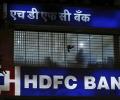
As many as 140 million customers of HDFC Bank and Axis Bank are expected to face interruption in banking services in the weekend due to the former's system upgrade and the transition of Citi India business to the latter. Both the banks have notified their customers about the interruption in services. HDFC Bank - the country's largest private sector lender with 93.2 million customers - had announced that it will undertake a system upgrade on July 13, wherein it will migrate its core banking system (CBS) to a new engineered platform to enhance customer experience.

'A mule operates someone else's account to transfer illegal money.'
Banks shall not charge fees for transactions settled on IMPS and UPI in excess of rates charged for NEFT for transactions above Rs 1,000, the order said.

In the first such collaboration for India, the country's flagship payments platform, the Unified Payments Interface (UPI), and Singapore's PayNow payment system have launched a real-time cross-border payment linkage system. The linkage, which was launched by Prime Minister (PM) Narendra Modi and Singapore's PM Lee Hsien Loong on Tuesday, was kicked off by a live cross-border transaction between Reserve Bank of India Governor Shaktikanta Das and Monetary Authority of Singapore managing director Ravi Menon, using mobile phones.

BHIM is a platform designed to make payment through UPI and USSD modes simpler.
 © 2026 Rediff.com - Advertise with us - Disclaimer - Privacy Policy - Sitemap - Feedback - About us - Terms of use - Grievances